This system is The Soris engine.
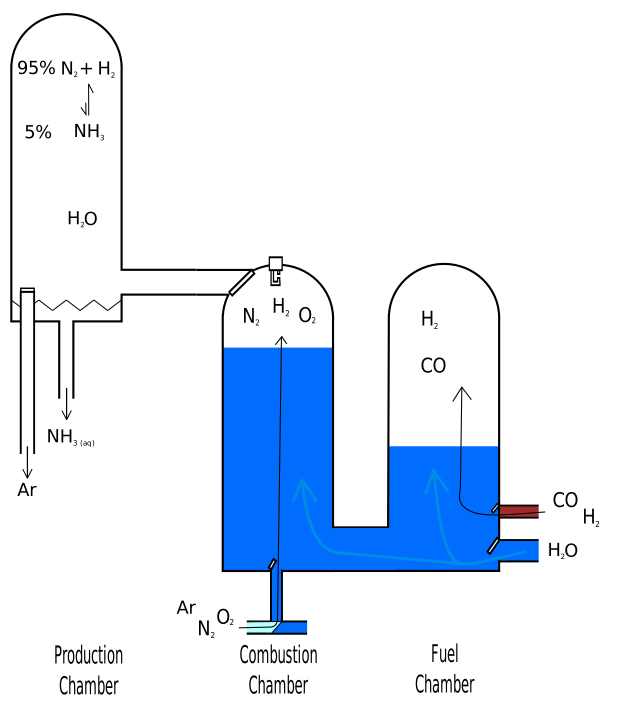
The Soris engine has 3 inputs;
The outputs
Given the sudden unavailability of the equipment to make fertiliser, this synthesis may be useful given the relative simplicity of the plant.
4 moving valves (water feed, exhaust port, argon vent, and emergency water feed cut off.) The other valves air inlet/water drain and water gas inlet were almost certainly fluidic valves with no moving parts in the original plant.
The plant itself must be capable of handling extreme pressures, but luckily materials knowledge and construction techniques has moved on from when the original was built.
The equipment has no need of electricity beyond the trivial amount needed to operate a spark plug.
Plants that do use electricity will have the costs in maintenance of those systems and fuel to generate the electricity.
This system lacks those costs and dependencies, and so is more resilient in uncertain times.
This needs to be set against that the process burns 14.3% of the water gas fed into the engine and that the product is aqueous ammonia.
A Haber Bosch plant has to use electricity to run an air separation unit and pumps to move various fluids around the plant; by some estimates this also consumes about 14% of the energy the plant, with obviously higher maintenance costs. On top of that there is the energy cost of generating the electricity itself, which is difficult to quantify, but must be added as well.
That is the basics, others can do the finer details with optimal geometries etc.
| 7 (CO, H2)(g) + 7 H2O(g) → 14 H2 (g) + 7 CO2 (aq) | Fuel Chamber | |
| 14 H2 (g) + 4 N2 (g) + O2 (g) → 2 H2O (g) + 4 N2 (g) + 12 H2 (g) | Combustion Chamber | |
| 4 N2 (g) + 12 H2 (g) → 8 NH3 (aq) | Production Chamber |