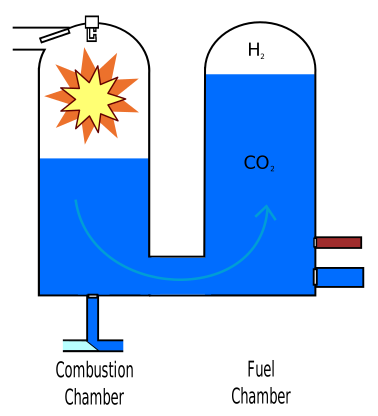
On the previous page I explained how the hydrogen fuel is made, and how the carbon dioxide gas is removed from the fuel chamber.
However if this process were to be repeated, the water would become saturated with carbon dioxide.
Therefore to be rid of the dissolved carbon dioxide the water that makes up the pistons must be flushed.
This is done by the use of a drain in the bottom of the combustion chamber. (This drain doubles as the air inlet line.)
The flushing of the water causes both pistons to travel back simultaneously.
It must be noted that the pressures in the combustion chamber and the fuel chamber are not equal.
In the fuel chamber the amount of gas is the same but the energy released by the water gas shift reaction means that the gas is now at higher pressure due to being heated.
In the combustion chamber the pressure drops for three reasons.
all of which results in a lower pressure in the combustion chamber than the initial state.
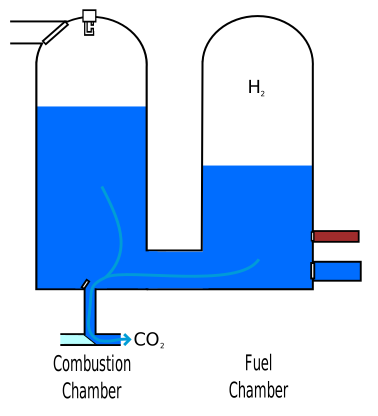
This pressure differential between the two chambers means when the water piston is withdrawn to the point where the ‘crankshaft’ gets uncovered the hydrogen flows down the pressure gradient.
This is how the fuel is fed into the combustion chamber.
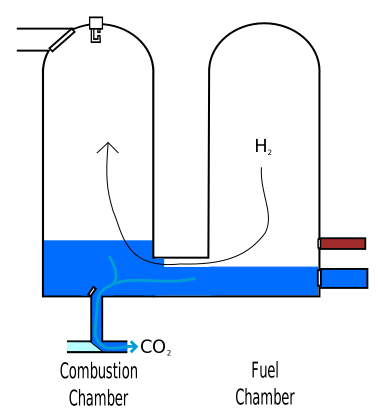
When the CO2 tainted water is removed the two chambers have equalised in gas pressure, a water feed valve opens at the bottom of the fuel chamber letting in fresh water.
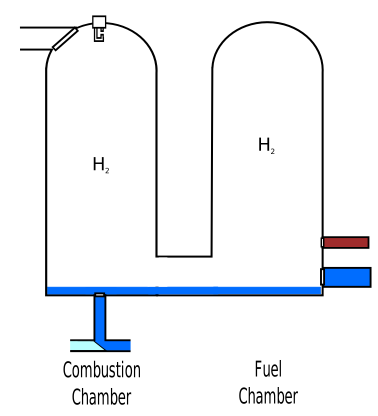
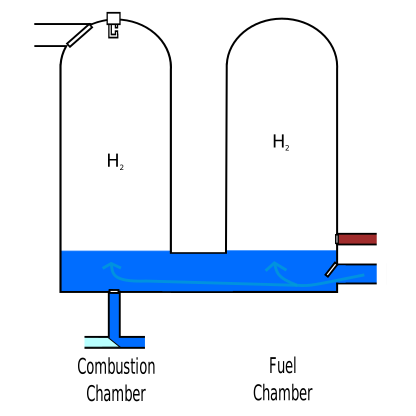
When the crankshaft is covered again and the gases in the two chambers are separated. The water gas line in the fuel chamber is reopened and allowed to refill the fuel chamber with water gas.
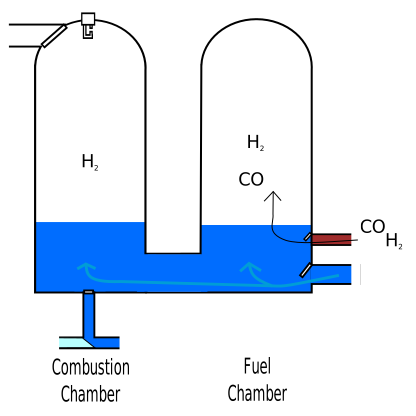
More water is allowed to flow into the chambers resulting in both pistons travelling forward until the pressure causes air to be released from the drain and the sparker to fire.
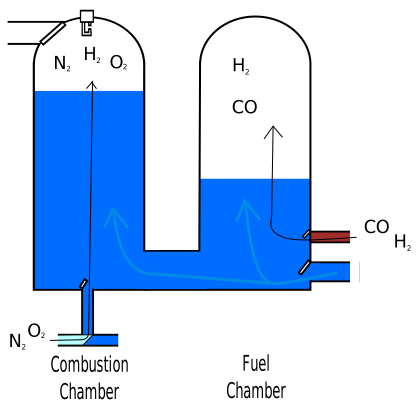
The travelling back of the combustion chamber piston after ignition causes the water feed valve and water gas valve to close.