On this second page I will explain the two tricks for making the hydrogen fuel.
Next to the combustion chamber put a second cylinder, henceforth called the fuel chamber.
The fuel chamber is filled with water gas and water
The piston in the combustion chamber is attached to the crankshaft such that the energy imparted on the piston by ignition of the fuel air mix causes the fuel chamber piston to compress the gases in the fuel chamber.
This compression of water gas and water results in the water gas shift reaction. This is exothermic and produces hot hydrogen and unwanted carbon dioxide.
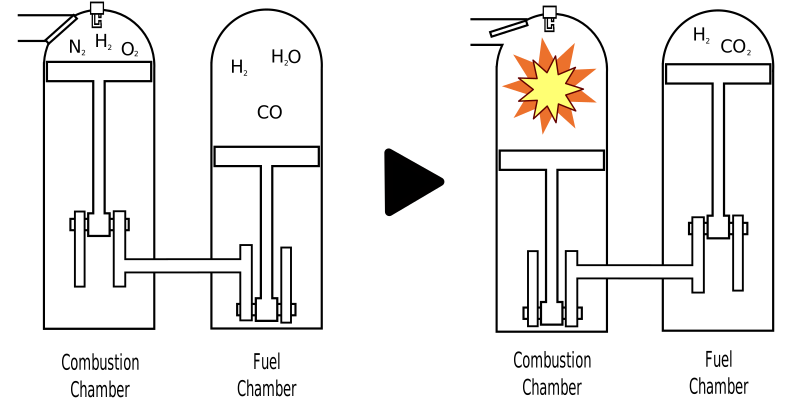
This leaves 4 problems 3 of which are inherent to all internal combustion engines and forth the removal of unwanted carbon dioxide.
So to listThe solution to all the listed problems is to replace the mechanical pistons (and crankshaft) with a water piston.
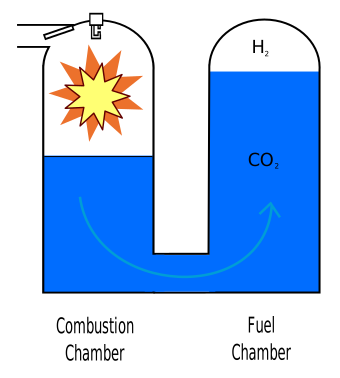
Point 3 is somewhat more complex than it at first seems because the top of the chambers where the water piston does not reach need to be cooled.
The explosion causes the top of the piston to enter a supercritical/gas state and the energy imparted to the piston in the fuel chamber results in a similar outcome in the other chamber.
In the fuel chamber a much faster and more complete water gas shift reaction occurs, but this also means that when the piston travels back, the water condenses back to liquid on the nearest surface including surfaces not covered by the water piston, so cooling them.
In the combustion chamber this results in the same cooling effect by the same mechanism, but also increases the steam volume in the exhaust gases reducing the ammonia concentration below the approx. 80% that one would expect from combustion alone.
Ammonia has a maximum concentration in water, it is the conditions of the production chamber that determine this saturation point. Water from the piston ensures that this saturation point is not reached. Water in excess of that required in the production chamber could be added to ammonia gas externally to the pyramid.
The combustion chamber must be carefully designed to ensure the maximum amount of the air molecules enter the exhaust and minimum amount of gasified water from the piston, but that enough water is gasified in the right places to cool the top of the chamber and ensure that the water in the production chamber is not saturated with ammonia.
Next Page